
What Is Green Oak Framing? A Straight-Talking Guide for UK Homeowners
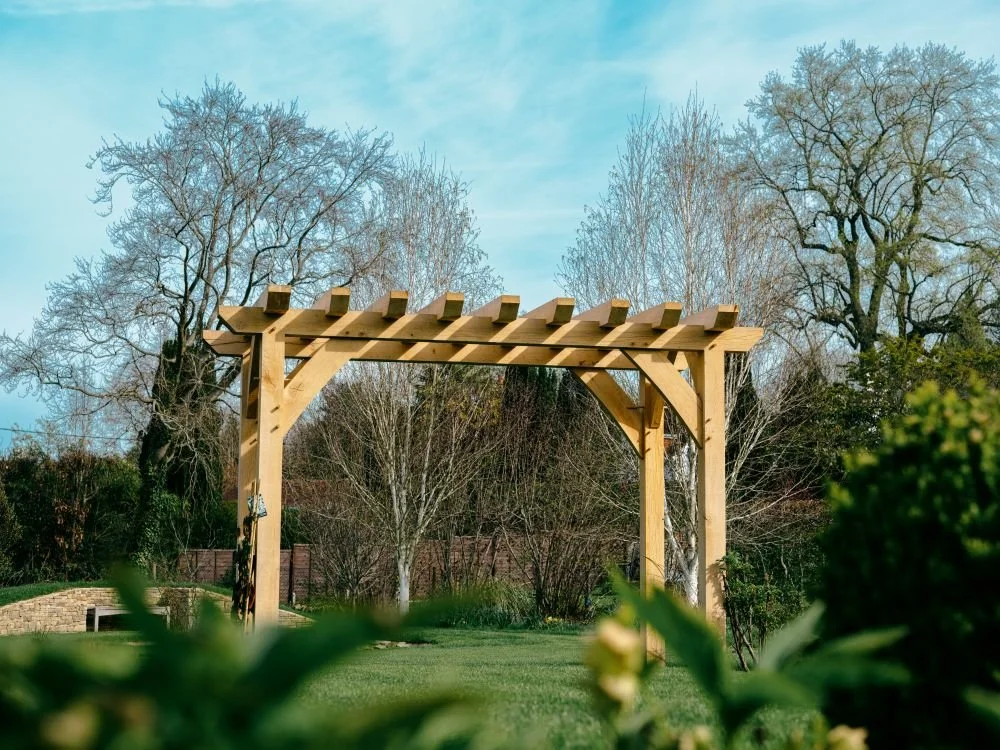
If you love the character and longevity of traditional timber buildings, you have probably come across the term green oak framing. You may also have heard concerns about cracking, movement, or maintenance. The reality is much simpler and far more reassuring once you understand how oak behaves naturally.
At Fallen Oak Frames, every frame is designed, hand-cut, and raised using traditional carpentry methods combined with careful modern detailing. This guide explains what green oak framing actually is, why movement is expected, and how well-crafted oak structures continue performing beautifully for generations.
What Green Oak Framing Actually Means
Green oak is freshly felled oak timber that still contains a naturally high moisture content. Unlike kiln-dried timber, green oak remains easier to shape and cut accurately during fabrication.
Traditional oak framing uses mortise-and-tenon joints secured with oak pegs. Once assembled, the timber slowly dries and shrinks slightly across the grain over time. Rather than weakening the structure, this natural seasoning process tightens the joints and locks the frame together even more firmly.
This centuries-old method is why medieval oak-framed buildings still stand throughout Britain today.
The type of truss plays a major role in both appearance and cost.
Why Green Oak Works So Well Structurally
Green oak offers several advantages for structural timber framing:
Excellent Workability
Fresh oak cuts cleanly and allows highly accurate jointing. That precision is essential for strong mortise-and-tenon construction.
Naturally Tightening Joints
As the oak seasons gradually, slight shrinkage around the pegs tightens the frame naturally, improving structural integrity over time.
Sustainability Benefits
Green oak requires far less processing energy than kiln-dried timber and supports more efficient use of locally sourced material.
At Fallen Oak Frames, each timber is selected individually and joints are cut entirely in-house. Every frame is dry-assembled in the workshop before being dismantled and transported for installation on site.
To explore handcrafted oak frame projects and traditional builds, visit:
New oak-framed buildings in Hampshire
How Green Oak Movement Is Designed Into the Frame
One of the biggest misunderstandings about oak framing is the idea that movement means failure. In reality, traditional oak structures are specifically designed to accommodate natural movement safely.
Pegged Mortise-and-Tenon Joints
Oak pegs secure the joints while allowing the frame to tighten naturally as it seasons.
Curved Braces
Curved braces strengthen the frame against lateral movement while adding the visual elegance associated with traditional oak buildings.
Flexible Glazing Systems
Modern glazing systems are detailed carefully to allow expected timber movement without stressing glass panels or seals.
This balance between traditional craftsmanship and practical detailing is what allows green oak buildings to remain both structurally reliable and visually beautiful.
Green Oak vs Seasoned Oak
Homeowners often ask whether seasoned oak is “better” than green oak. The answer depends entirely on where the timber is being used.
Green Oak Is Ideal For:
Main structural posts and beams
Roof trusses
Traditional timber framing
Large-section structural work
Seasoned Oak Is Useful For:
Fine joinery details
Stable glazing interfaces
Areas requiring tighter movement tolerances
Both materials have their place in a properly designed project.
Common Myths About Green Oak
“Green Oak Frames Warp Badly”
A well-designed frame should not twist dramatically or distort out of shape. Correct timber sizing, balanced cutting, and strong joint detailing control movement effectively.
“Cracks Mean the Frame Is Failing”
Surface checks and small splits are completely normal as oak dries. These are typically cosmetic and form part of the timber’s natural character rather than a structural concern.
“Oak Frames Need Constant Maintenance”
Exterior oak generally requires very little maintenance. Most owners simply allow the timber to weather naturally into a silver-grey finish over time.
Basic upkeep usually involves:
Keeping gutters clear
Preventing standing water
Checking surrounding drainage
Avoiding moisture-trapping coatings
The Fallen Oak Frames Process
At Fallen Oak Frames, every project follows a carefully managed process from initial drawings through to final raising.
In-House Design and Coordination
The team develops bespoke designs, works alongside architects and engineers, and coordinates heritage requirements where needed.
Workshop Pre-Assembly
Every joint is trial-fitted in the Hampshire workshop before delivery to site. Each connection is marked and checked carefully before erection.
Craned Frame Raising
Frames are raised safely and efficiently using lifting equipment, with many structures assembled within just a few days depending on size and complexity.
Conservation-Led Approach
For listed and heritage buildings, the focus remains on retaining historic character while integrating new structural elements sympathetically.
Useful Green Oak Framing Terms
Mortise-and-Tenon
A traditional joint where a projecting timber section fits precisely into a matching socket and is secured with a peg.
Pegged Joint
A joint fixed using oak pegs that tighten naturally as the timber seasons.
Sling Brace
A curved structural brace designed to improve rigidity and distribute loads.
Sill Beam
A horizontal base timber supporting wall or glazing elements.
Checking
Natural surface splits that occur as oak dries. Usually cosmetic rather than structural.
FAQs
What is green oak framing?
Green oak framing is the traditional method of building structural timber frames using freshly felled oak joined with pegged mortise-and-tenon joints.
Can green wood be used in structural framing?
Yes. Traditional timber framing methods are specifically designed around the properties of green oak and its natural seasoning process.
What are the disadvantages of green oak?
Green oak naturally develops surface checks and experiences minor movement as it dries. Proper detailing is essential around glazing and sensitive interfaces.
How long do oak framed buildings last?
With sound design and good water management, oak framed buildings can last for centuries. Many historic examples throughout the UK remain in daily use today.
Why Homeowners Choose Fallen Oak Frames
Fallen Oak Frames combines traditional British craftsmanship with careful modern detailing and practical project management. Every frame is designed, cut, and assembled in-house by experienced craftsmen with a strong focus on quality and longevity.
The team also welcomes clients to visit the Hampshire workshop to see projects in progress and understand how traditional oak framing works firsthand.
To learn more about bespoke oak framing projects across Hampshire, Surrey, and the wider UK, visit:
Summary
Green oak framing is one of the most proven and characterful building methods available. Natural movement is not a flaw but part of how the structure strengthens over time. With proper detailing, thoughtful design, and skilled craftsmanship, oak frames deliver warmth, longevity, and timeless visual appeal.
Whether you are planning a garden room, porch, barn, or full oak-framed home extension, Fallen Oak Frames provides practical advice, traditional expertise, and carefully handcrafted timber structures built to last for generations.