
Anyone researching a new extension or outbuilding quickly runs into two similar-sounding terms: oak frame and timber frame. At Fallen Oak Frames, we get asked to explain the difference almost every week, since the two are often used loosely and interchangeably online.
While both approaches share the same basic principle of building a structural frame from timber, the materials, construction methods and finished character of oak framing and standard timber frame construction differ considerably.
This guide breaks down exactly how oak framing compares with more conventional timber frame building, so you can decide which genuinely suits your project.
What Makes Oak Framing Different
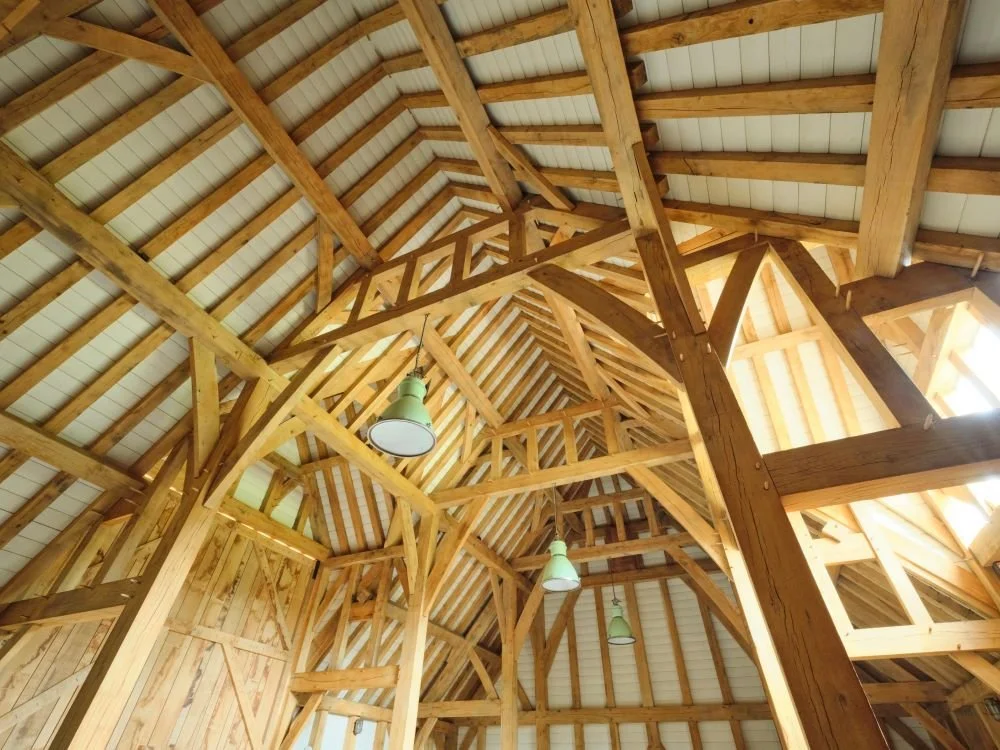
Green oak framing uses unseasoned, freshly cut oak, worked using traditional joinery techniques such as mortise and tenon joints, secured with oak pegs rather than metal fixings, following methods that date back centuries.
This traditional approach produces a frame with genuine character, since green oak naturally moves, checks and weathers over time, developing the silvery grey patina that oak framed buildings are known for. Our oak frame builders work entirely within this heritage tradition.
Standard timber frame construction, by contrast, typically uses kiln-dried, engineered timber, assembled with modern fixings and designed to remain dimensionally stable rather than move and settle naturally over the years.
Traditional Joinery Versus Modern Fixings
Oak framing relies on carefully cut joints that lock timbers together without metal fasteners, a skilled process requiring specific carpentry training and considerable time to execute properly by hand.
Standard timber frame construction generally uses nails, screws or metal connector plates, allowing for faster assembly but producing a structure that behaves quite differently from a traditionally jointed oak frame.
How Each Ages Over Time
Green oak frames continue to season after construction, developing small natural checks and cracks as they dry, and gradually weathering to a distinctive silver-grey colour if left unfinished externally.
Kiln-dried standard timber frames are more dimensionally stable from the outset, since the drying process has already occurred before construction, resulting in less visible movement or checking over time.
Comparing Cost, Durability and Appearance
Oak framing generally costs more than standard timber frame construction, reflecting both the material cost of quality oak and the skilled, time-intensive craftsmanship involved in traditional joinery.
In exchange, oak offers exceptional durability, with well-maintained oak frame buildings lasting for generations, sometimes centuries, as demonstrated by the historic timber frame buildings our team regularly restores across Hampshire.
Appearance is often the deciding factor for many clients. Oak framing delivers a distinctive, characterful look with exposed structural timbers, vaulted ceilings and natural grain, appealing to those seeking a traditional or heritage aesthetic rather than a purely functional structure.
Key differences between oak framing and standard timber frame construction:
Oak framing uses green, unseasoned oak; standard timber frame typically uses kiln-dried timber
Oak joints rely on traditional joinery and pegs, rather than modern metal fixings
Oak frames develop natural character and weathering over time
Oak framing generally costs more, reflecting material and craftsmanship
Both approaches offer strong structural performance when built correctly
Choosing the Right Approach for Your Project
For a period property, a heritage restoration, or anyone wanting a genuinely distinctive, characterful extension, oak framing is often the natural choice, blending seamlessly with existing timber frame buildings.
For projects prioritising speed of construction or a more contemporary, uniform appearance, standard timber frame construction may be the more practical route, particularly for larger commercial builds.
Speaking with an experienced oak frame specialist early in your planning process helps clarify which approach genuinely suits your property, budget and vision, rather than assuming one option automatically fits every project.
Frequently Asked Questions
Is oak framing more expensive than standard timber frame construction?
Generally yes, reflecting both the cost of quality oak and the skilled, time-intensive traditional joinery involved. Many clients find the durability and character oak provides justifies the additional investment.
Does an oak frame need more maintenance than a standard timber frame?
Oak is naturally durable and requires relatively little maintenance, though it will develop natural checks and weathering over time. Our team can advise on maintaining an oak framed extension to keep it looking its best.
Can oak framing be combined with modern materials?
Yes, many modern oak framed extensions combine traditional oak framing with contemporary glazing and materials, creating a striking blend of heritage character and modern design.
Conclusion
Oak framing and standard timber frame construction share a common foundation but differ significantly in material, technique, cost and character, making the right choice largely dependent on your specific goals and property.
Fallen Oak Frames brings over 30 years of combined experience designing, building and restoring oak framed structures across Hampshire, from new extensions to heritage restorations.
Considering an oak framed project? Get in touch with Fallen Oak Frames today for a free consultation.